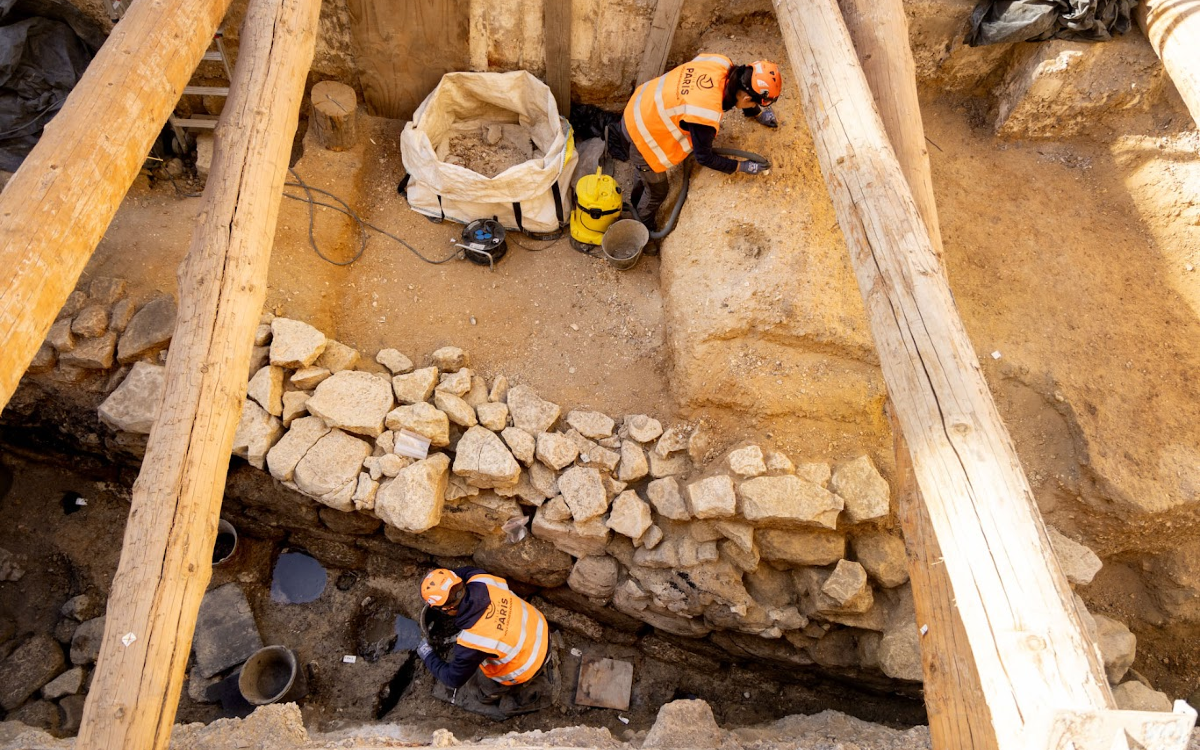
Preventive excavations have been underway since February 2026, conducted by the City of Paris’s Archaeological Division and the National Institute for Preventive Archaeological Research (Inrap) in two courtyards of the Hôtel-Dieu (AP-HP) on the Île de la Cité. Recently discovered, the remains of a stone wall and charred wood could represent a major breakthrough in our understanding of Gallic Lutetia. Here’s what we know.
Vidéo Youtube

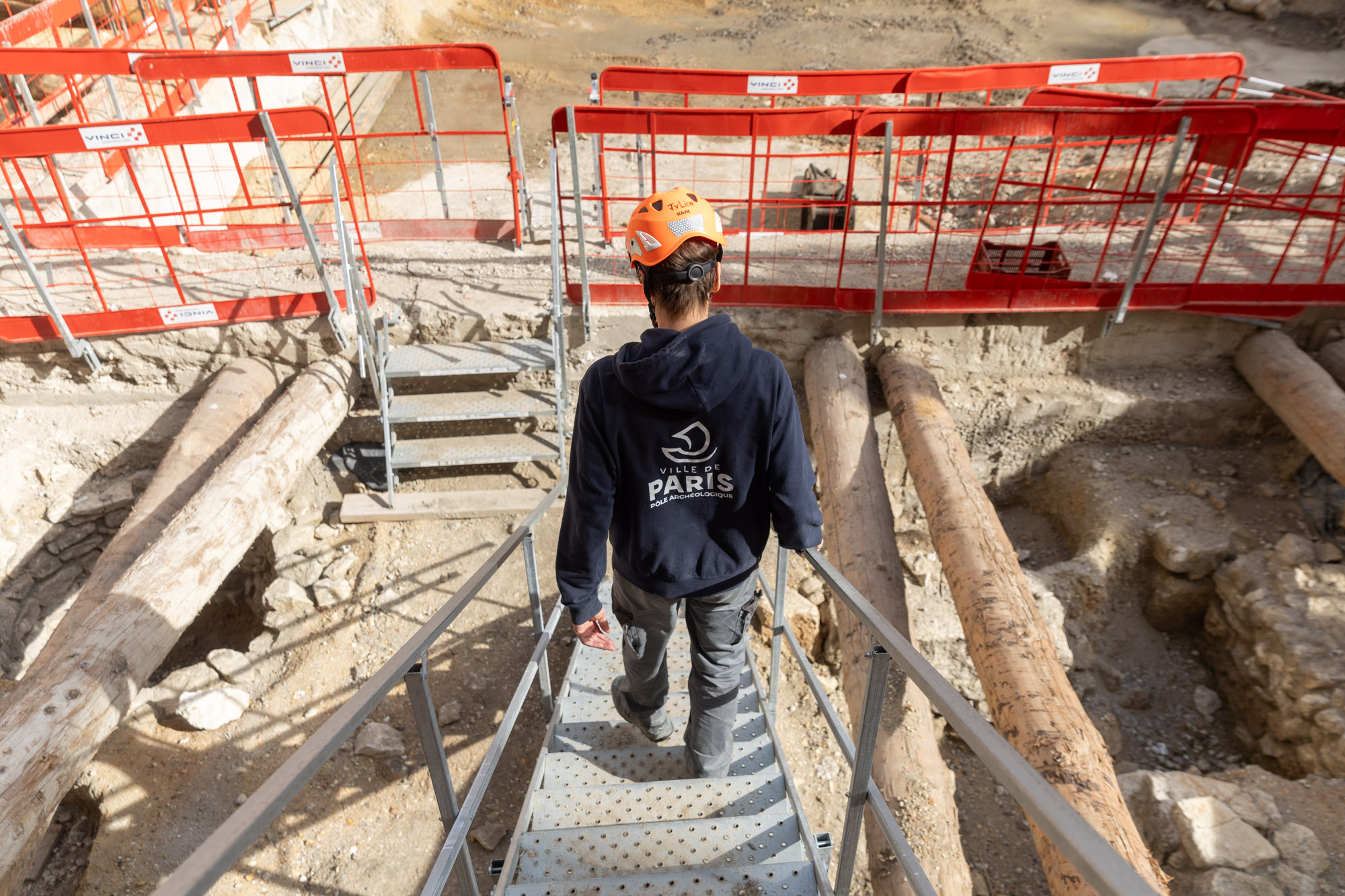
Summer 2026. David Couturier, excavation director for the Department of Architectural History and Archaeology of Paris (DHAAP), has been working for several months at the site in a courtyard of the Hôtel-Dieu (Paris Center) on the Île de la Cité. Preventive excavations were mandated by the Ministry of Culture and the Regional Directorate of Cultural Affairs (DRAC) for Île-de-France, which is overseeing the scientific and technical aspects of the project prior to the construction of two new buildings for the hospital.
The archaeologist knows that the site is a landmark: it was here that Théodore Vacquer unearthed, 150 years ago, the most significant remains in the history of Paris. When his trowel uncovers the first sections of a dry-stone wall, he senses that he has found “something important.”
But in archaeology, as in any science, we must keep a level head until we have cleaned, analyzed, and dated the finds…
Archaeological Division of the City of Paris
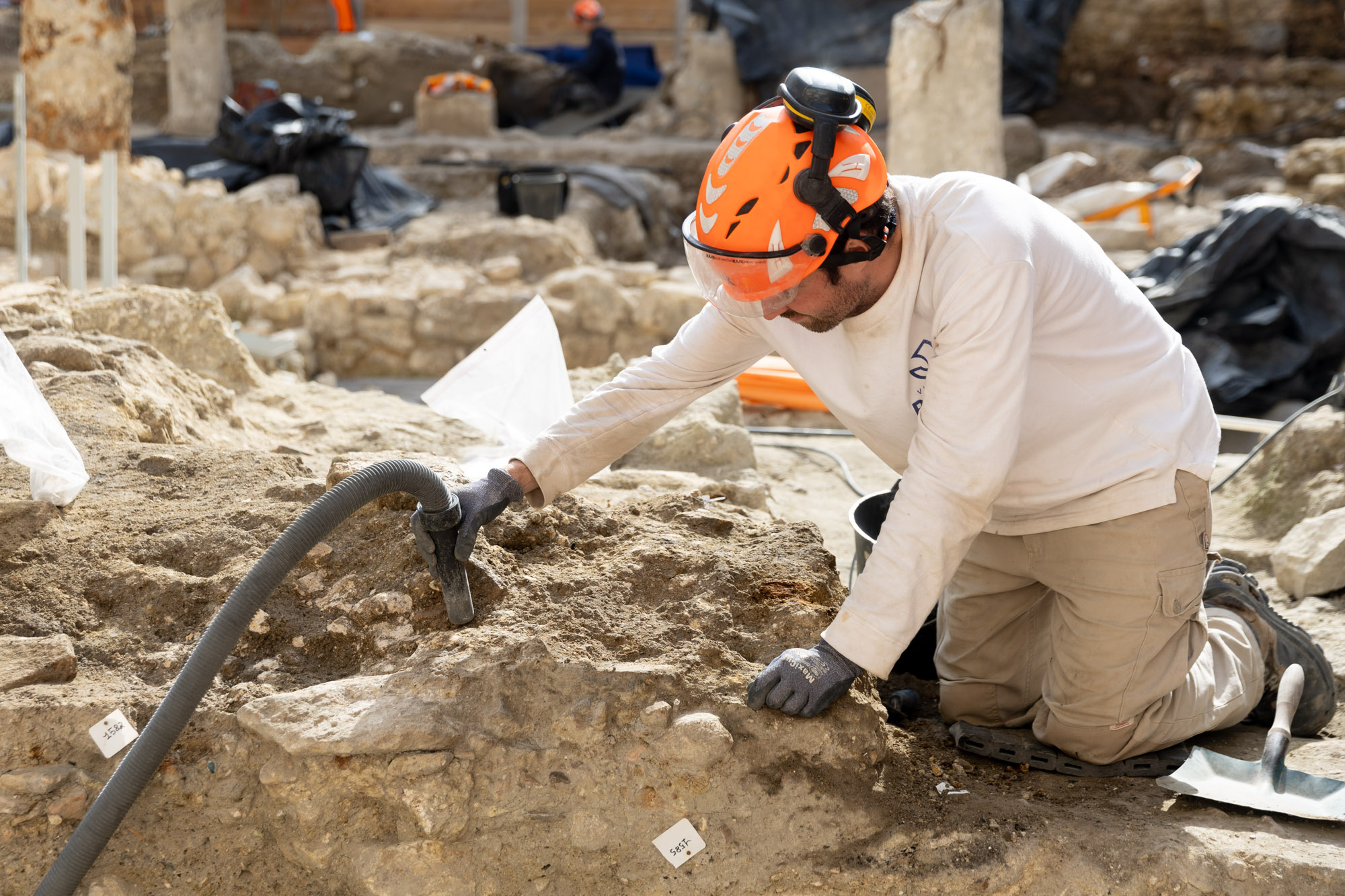
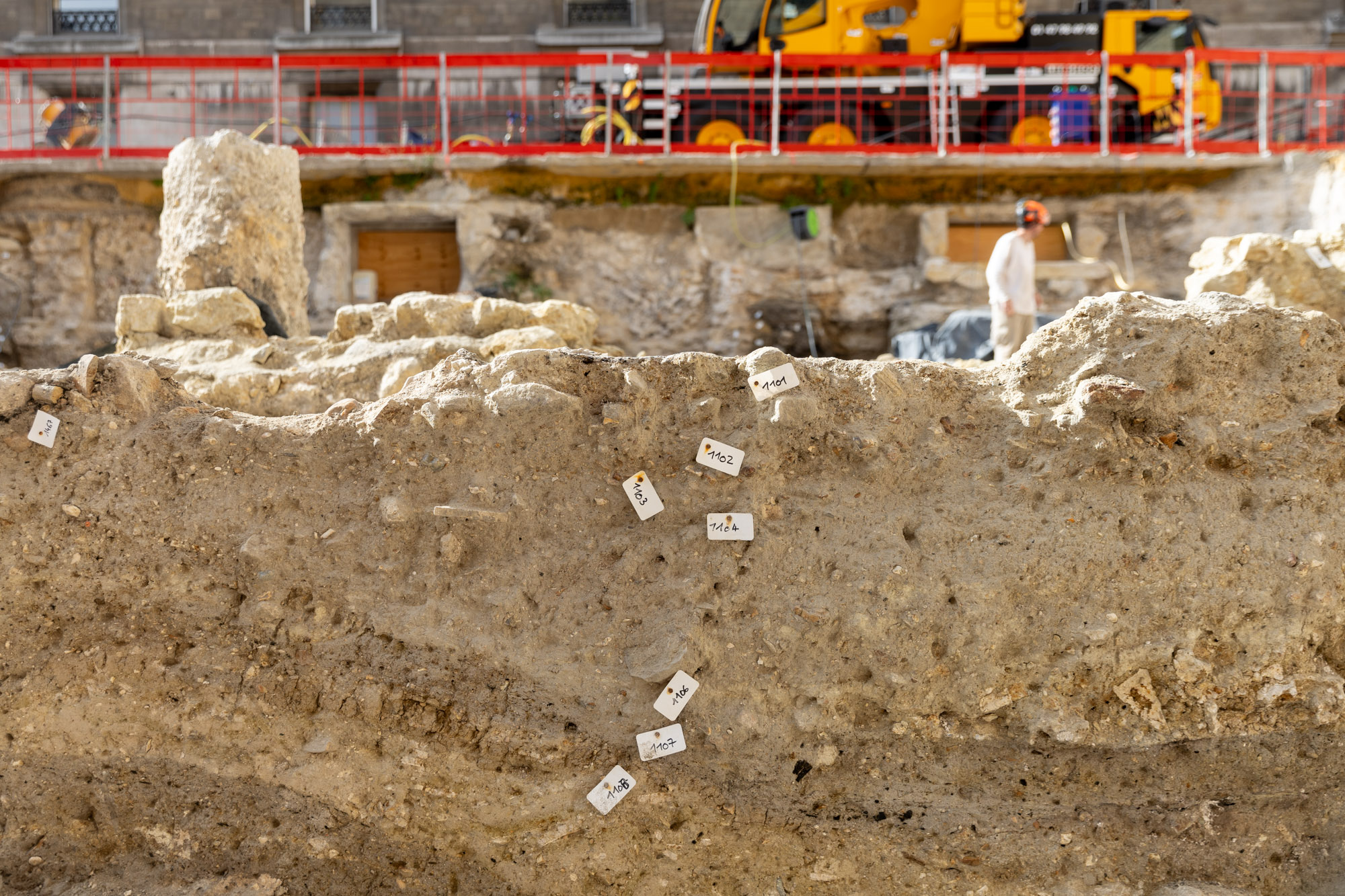
Together with his colleagues from the City of Paris’s Archaeology Division and those from the National Institute for Preventive Archaeological Research (Inrap), David Couturier is gradually uncovering a stone-and-wood wall, preserved over a length of about twenty meters, whose construction technique is characteristic of Gallic fortifications from the late Iron Age.
Even more remarkable is that the wall bears the marks of a violent fire. Charred seeds—indicating the presence of a storage area—and the remains of a burned-down wooden building have also been unearthed. It seems that the fire helped preserve an archaeological reality!
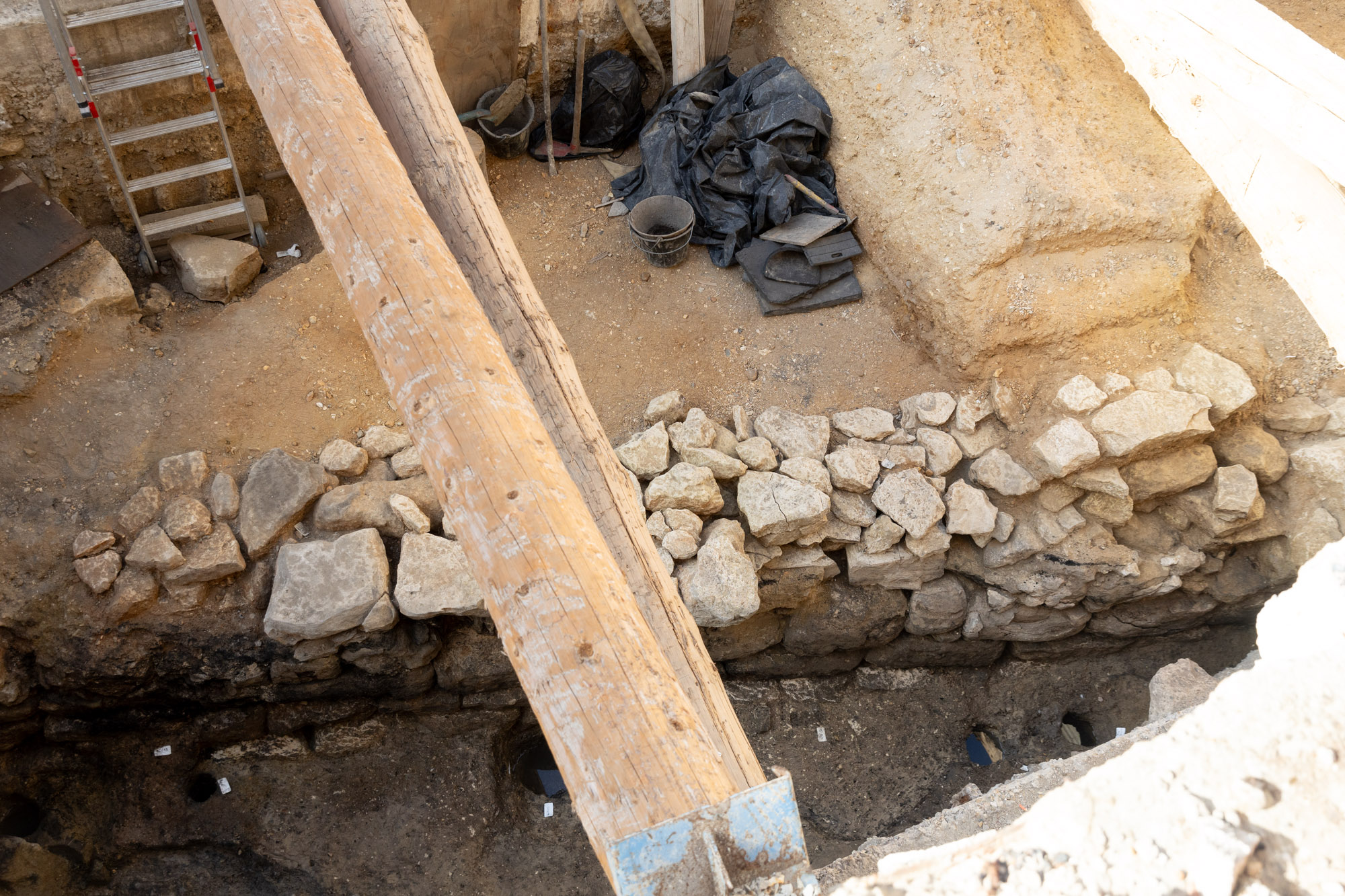
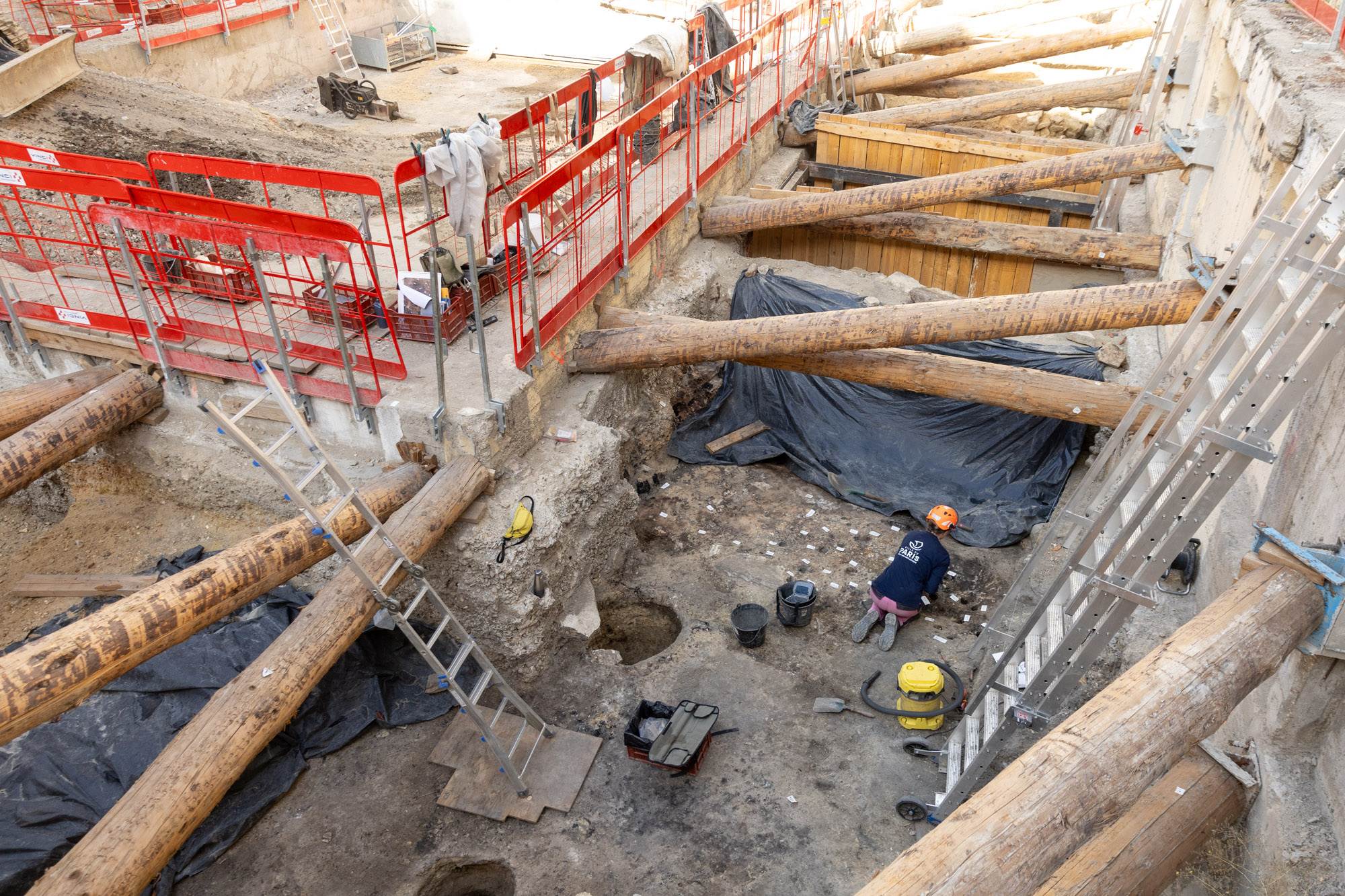
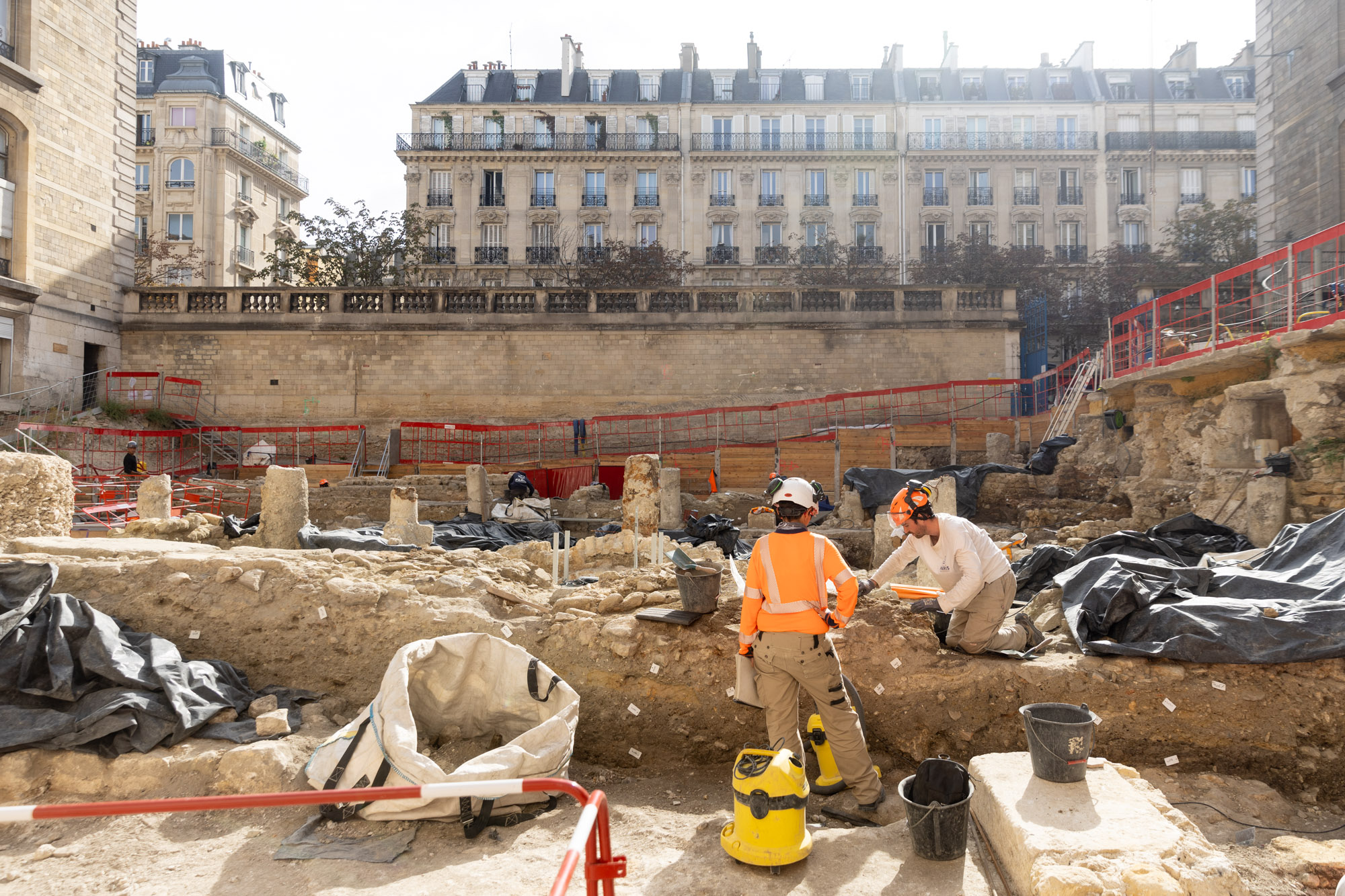
A remnant of the city of the Parisii?
Specialists in carbon-14 dating were dispatched to the site. The results: these remains appear to date from a period between 200 and 30 B.C. These findings, combined with the large artificial platform of sand and gravel located behind the structure, point to a theory that is nothing short of spectacular: what if this wall were actually a remnant of the rampart of the oppidum of Lutetia, the city of the Parisii? A rampart that is said to have been set ablaze in 52 BCE, during the confrontation between the Parisii and Caesar’s Roman troops!
Be careful, however: scientific caution still requires that we verify its function and chronology, but there is indeed a convergence of evidence here…
“This artifact is certainly something that Parisian archaeologists have been searching for for years, if not centuries,” smiles Dorothée Chaoui-Derieux, chief heritage curator at the DRAC Île-de-France. “It’s moving… and surprising, since the preliminary survey had given no indication whatsoever that we might uncover remains from this period!”
The Story of Julius Caesar
The Gallic city of Lutetia is known primarily through the accounts of Julius Caesar. In 53 B.C., the Roman general traveled to “Lutetia of the Parisii,” where he convened an assembly of Gallic peoples. A year later, his lieutenant, Titus Labienus, faced the Gauls at the Battle of Lutetia. Caesar described the city as an oppidum of the Parisii situated on an island in the Seine.
According to his account, the Gauls set fire to their own settlements before the Roman troops arrived. But one question has remained unanswered for centuries: where exactly was this Gallic Lutetia located?
For a long time, the theory that the Île de la Cité was the site in question seemed the most obvious. Caesar’s description does indeed match that of an island connected by bridges and situated on a bend in the Seine, while the name Lutetia continues to be associated with the site in antiquity.
But archaeological evidence of an actual Gallic settlement on the Île de la Cité has remained very limited… The discovery made at the Hôtel-Dieu (AP-HP) could now reignite the debate.
Turning a Hypothesis into a Proof
This major discovery of the courtyard at the Hôtel-Dieu could therefore establish a link—for the first time in such a direct way—between modern-day Paris, the ancient site of Lutetia, and the Gallic Lutetia described by Caesar.
Given its unique nature, a report on a discovery of exceptional significance was approved by the Territorial Commission for Archaeological Research in the Center-North region in mid-September. This decision allows the Île-de-France Regional Directorate for Cultural Affairs (DRAC) to mandate the continuation of the excavation with additional personnel and logistical resources, in order to study the entire site through a series of analyses.
Archaeologists will seek in particular to determine:
- the exact purpose of the wall;
- its date of construction;
- the procedures for its destruction and disposal;
- the relationship between the wall and the sand and gravel platform;
- any potential developments along the Seine;
- the possible presence of older settlement layers beneath the structure.
The goal now is to turn an exceptional hypothesis into a scientific proof.
We hope to uncover other structures—houses, granaries, pits—as well as artifacts such as pottery… that will either supplement these findings or even contradict them.
Head of the Paris Archaeology Division
Settings Text Html