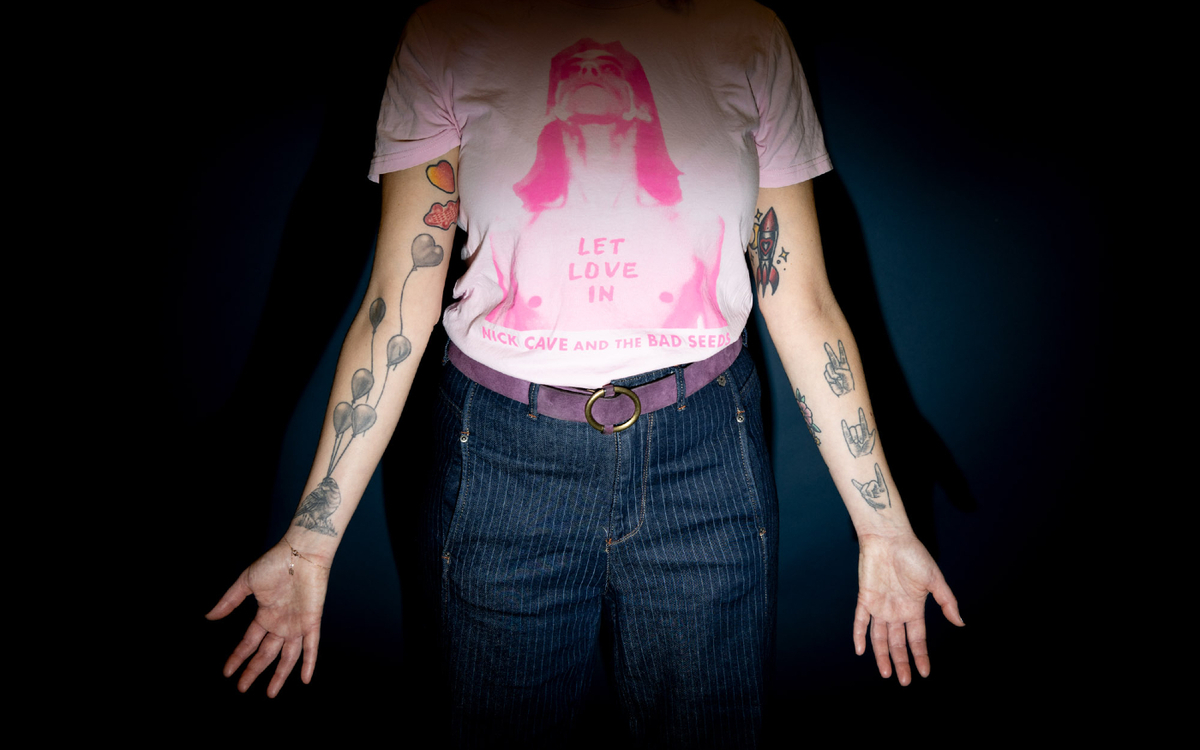
Just like Jesse Hughes, the frontman of the Eagles of Death Metal—who were performing at the Bataclan on the night of the attack—and who has Paris’s motto, “Fluctuat nec mergitur,” tattooed on his back, Alix, Olivier, and Christophe—survivors of the terrorist attack—got tattoos after November 13, 2015. They tell us why.
Olivier L.: “These tattoos are an incentive to keep doing what I love and going to rock and metal concerts.”
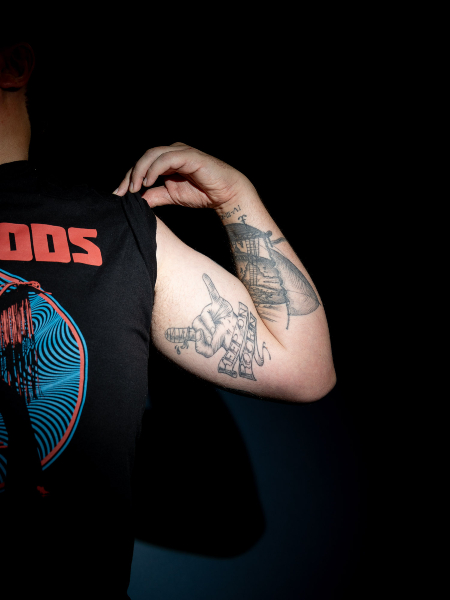
“On November 13, 2015, during the attack, I managed to hide in a dressing room at the Bataclan (11th arrondissement). I was rescued two hours later by law enforcement. In the spring of 2026, once the initial shock had subsided, I wanted to create a commemorative gesture connected to my own body.”
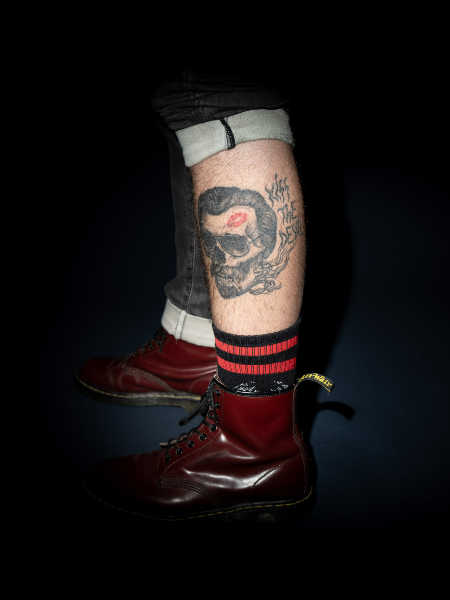
Since I already had tattoos, I thought of getting one with a message that suited me: a fist on my arm, with a small banner underneath that says “Keep on rockin’.” I also got a tattoo on my leg of Jesse Hughes’s face, the lead singer of Eagles of Death Metal.
Even though I wasn’t physically injured at the Bataclan, the attack left a wound inside me. These tattoos are a reminder to keep doing what I love and to go to rock and metal concerts! I go three or four times a month with members of the Life for Paris association, who have become friends. We all feel alive at these concerts.”
Alix N.: “These tattoos symbolize a beautiful life journey. The terrorists didn’t succeed in killing music.”
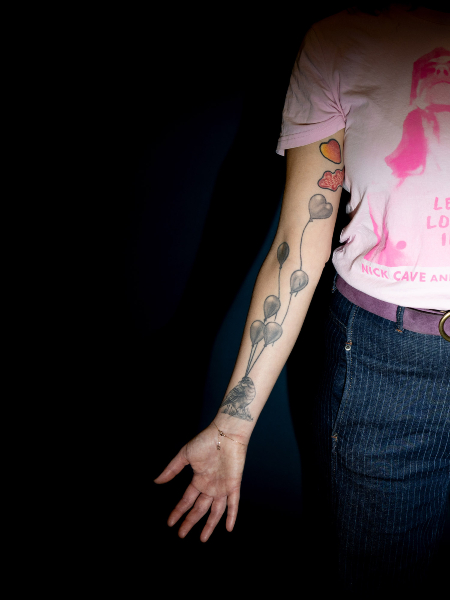
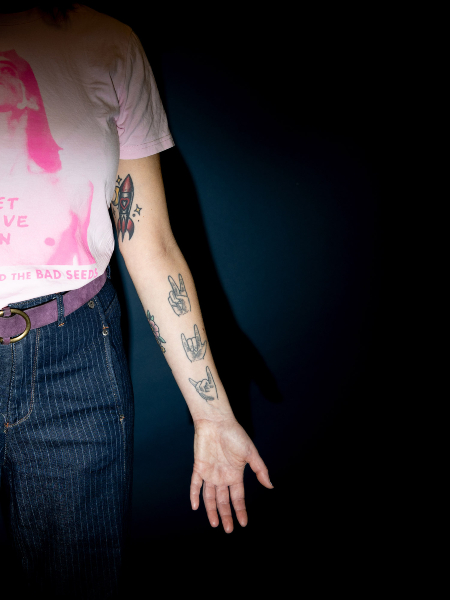
“At the Bataclan, I was right near the stage. I left through the back door ten to fifteen minutes after the attack began. That night, I experienced sheer horror and terror, and I was haunted by the smell of gunpowder and blood. I thought I was going to die. On my way home, during the night of November 13–14, I listened to the four Eagles of Death Metal albums: on the cover of the first album, I found three hands symbolizing the words “Peace, ” “Love, ” and “Death Metal.”
I decided to get these hands tattooed on my arm in 2018. On the other arm, I added a second tattoo, featuring a bird holding balloons in its beak. It’s a reminder of the ceremony organized by the association every year in front of City Hall in the11th arrondissement.
These tattoos symbolize a beautiful life journey. The terrorists didn’t succeed in killing music, and I didn’t make it out of the Bataclan alive just to be unhappy for the rest of my life. I often go to concerts with my friends who are members of the Life for Paris association, and I regularly return to the Bataclan. I’ve become friends with Didi, who was in charge of security at the venue in 2015 (and who saved many people by guiding them to the emergency exits). When I’m there, I feel a little bit at home.”
Christophe N.: “I chose dances of death because I find these medieval motifs beautiful, and I’m proud to showcase them.”
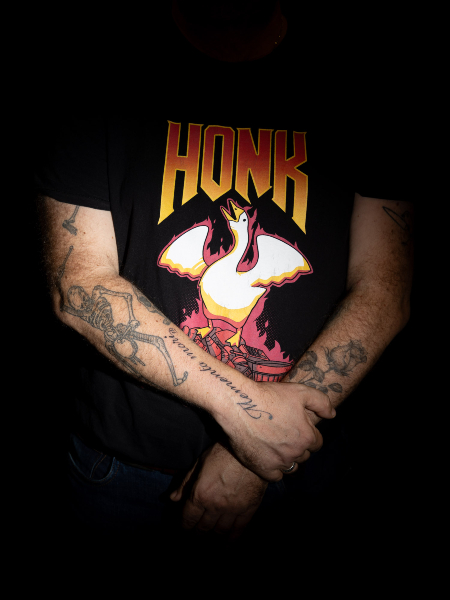
“On November 13, 2015, I was in the pit at the Bataclan when the terrorists stormed in. Under gunfire, I followed a group of people who made their way to a sort of storage room shaped like a hallway, to the right of the stage. We barricaded ourselves inside, and I was evacuated by law enforcement shortly after midnight, before the final assault on the terrorists.”
I have six tattoos directly related to November 13. The first one depicts a woman holding a rose—a flower meant as a tribute, in particular, to my friend Vincent, who died at the Bataclan. Then, I got four skeletons tattooed, inspired by the dances of death that were popular in the Middle Ages, along with the phrase “Memento mori” (“Remember that you will die”), which dates back to Roman antiquity.
These tattoos symbolize November 13. I chose the dances of death because I find these figures beautiful, and I’m proud to show them off. It’s also a link between November 13 and the band Queens of the Stone Age, which is very close to the Eagles of Death Metal.
"I've been back to the Bataclan several times since 2015, and I feel safe there. The venue has become a sort of 'friendly monster, ' like the ones in Japanese director Hayao Miyazaki's animated films."
Settings Text Html