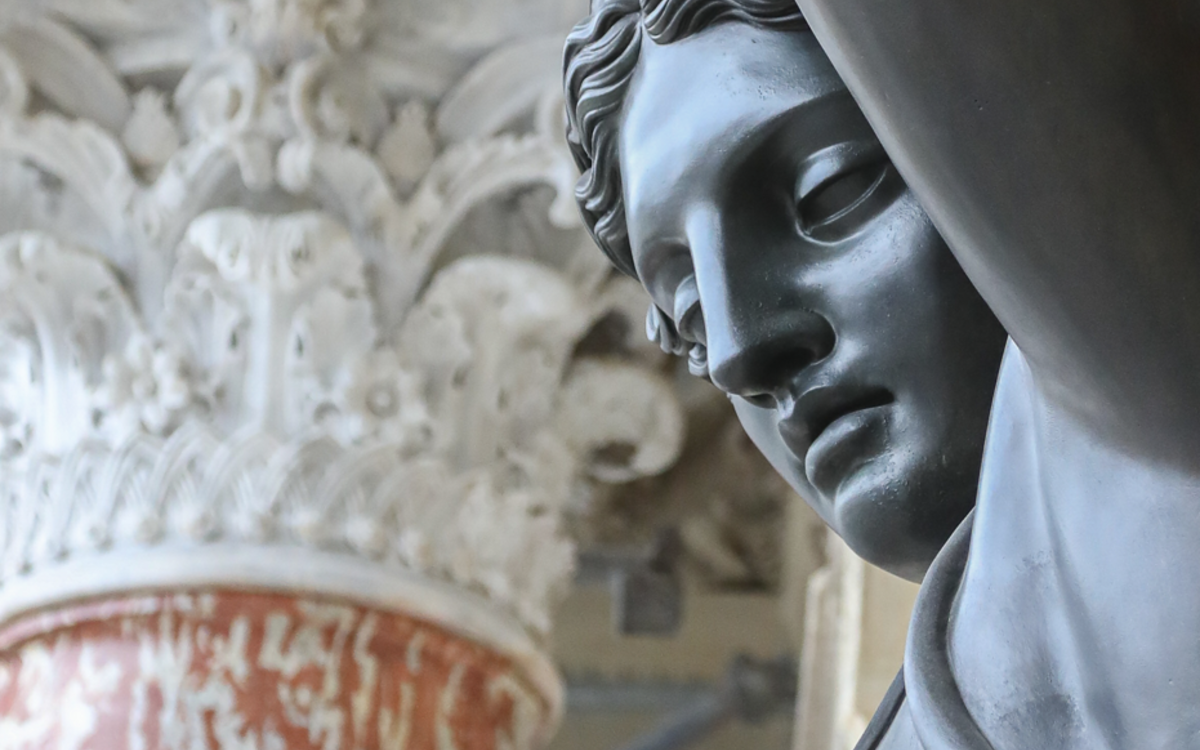
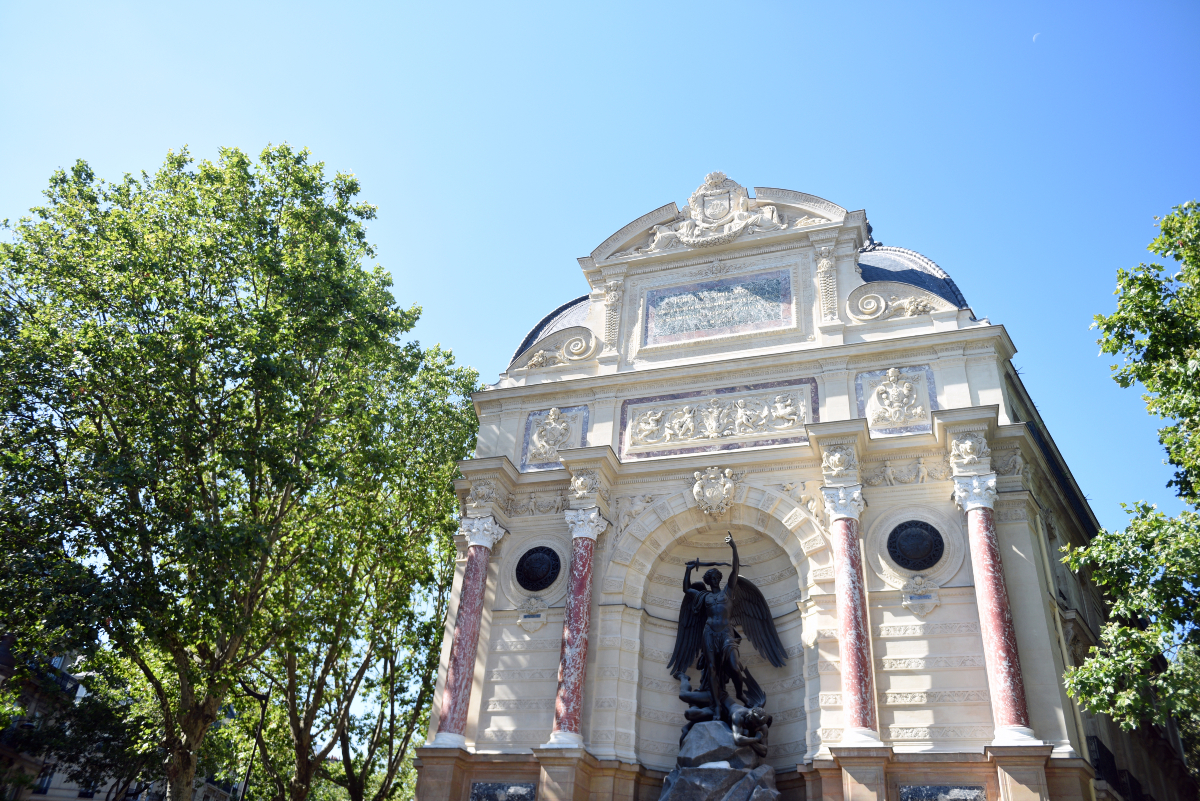
Bronze statues, sculpted decorations, water and light displays… After a year and a half of restoration, the Saint-Michel Fountain can once again be admired on Place Saint-Michel (5th arrondissement). We take a closer look at this massive restoration project, just a few weeks before the fountain is scheduled to be turned back on this fall.
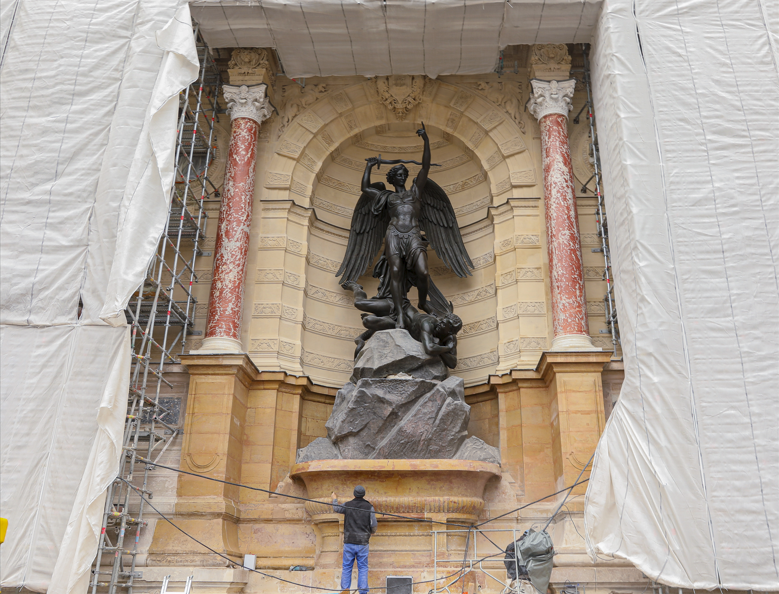
Since it was unveiled last July, “Saint Michael Slaying the Demon” has been shining with renewed splendor. Perched atop his rock, the archangel once again gazes down upon Parisians and tourists gathering at his feet. For more than a year and a half, sculptors, stonemasons, and restorers combined their expertise to breathe new life into the monument designed by Gabriel Davioud under Napoleon III. It was a spectacular restoration that has brought the statue’s colors back to life.
“The last restoration, in 1998, had been only partial. This is the first complete restoration of the fountain. The challenge was to restore the original polychromy and respect its history. There was no question of recreating a brand-new fountain,” emphasizes Gilles Merlin, of the Department of Public Works and Architecture (DCPA) of the City of Paris.
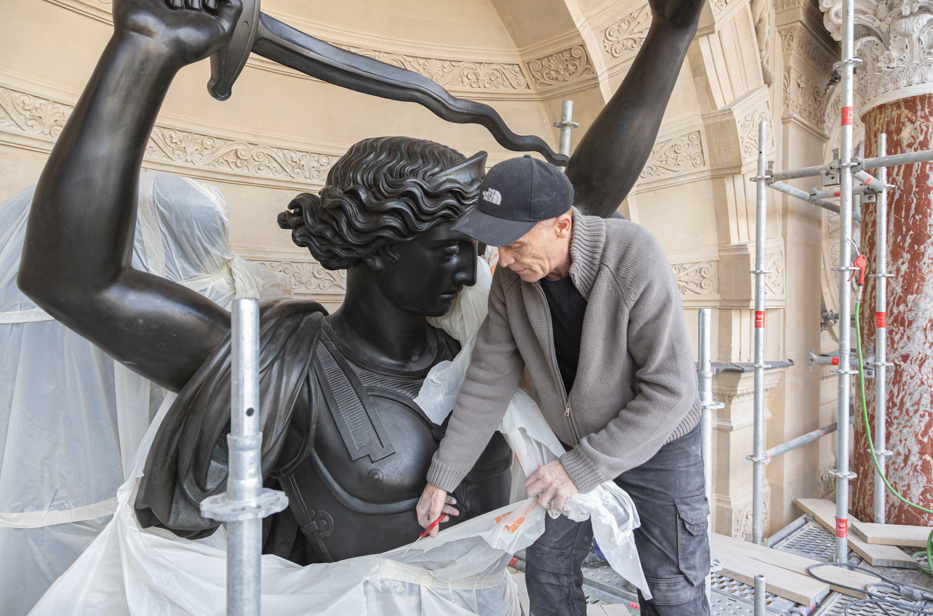
Launched in May 2025, the project focused on cleaning and restoring the sculpted decorations and statues—two winged dragons, four allegorical figures, and the large central statue of Saint Michael. The electrical and plumbing systems were also renovated.
Beyond Cosmetics
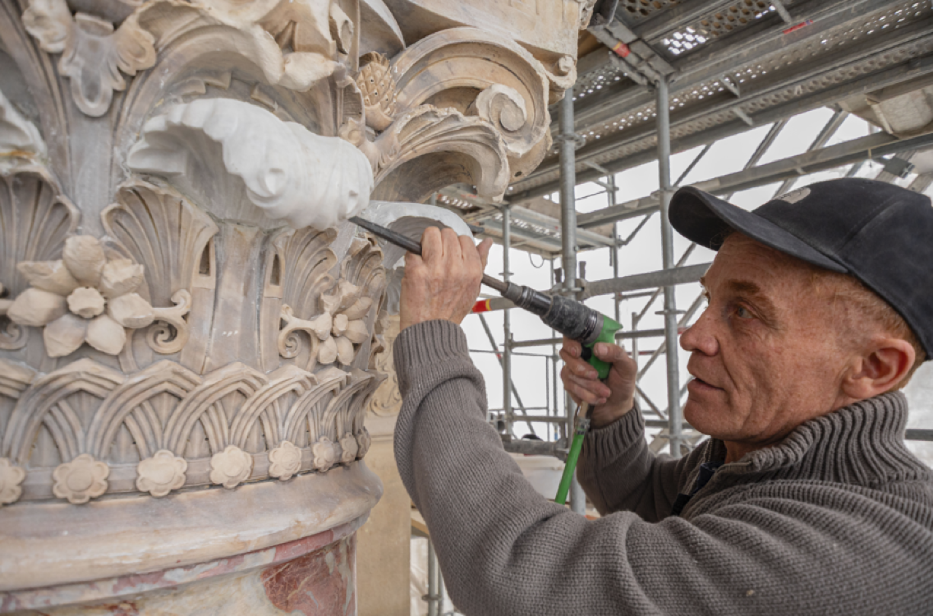
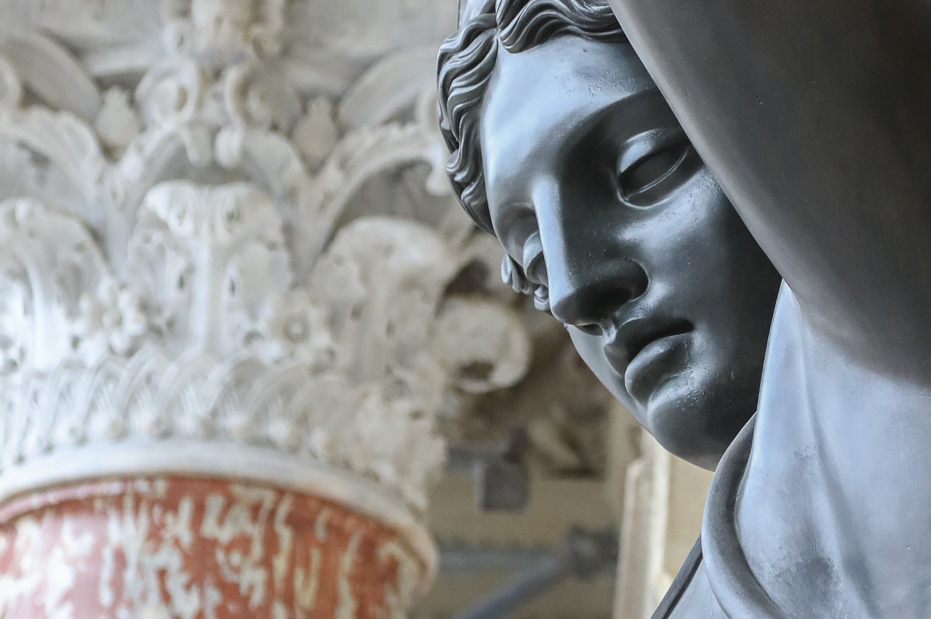
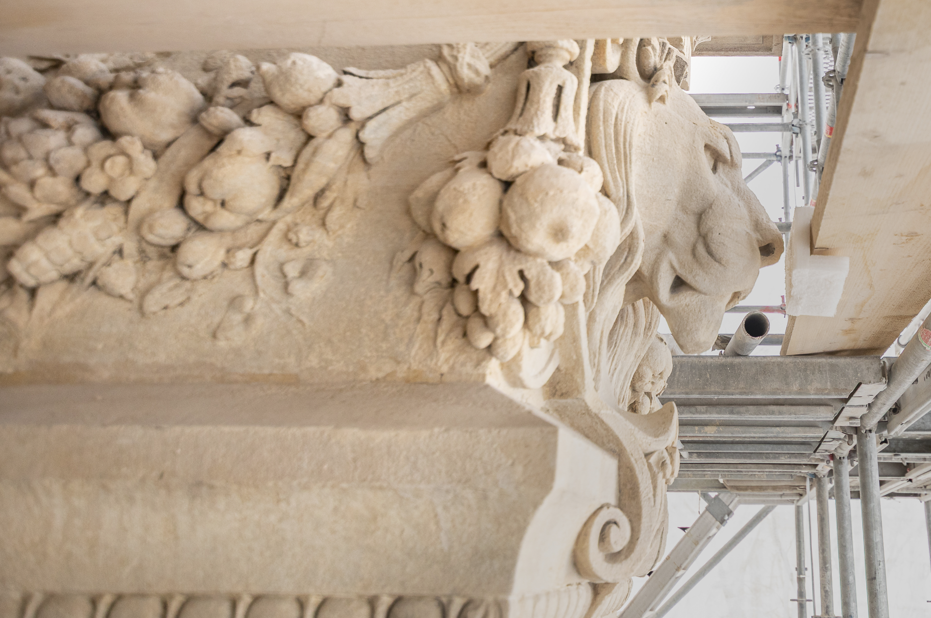
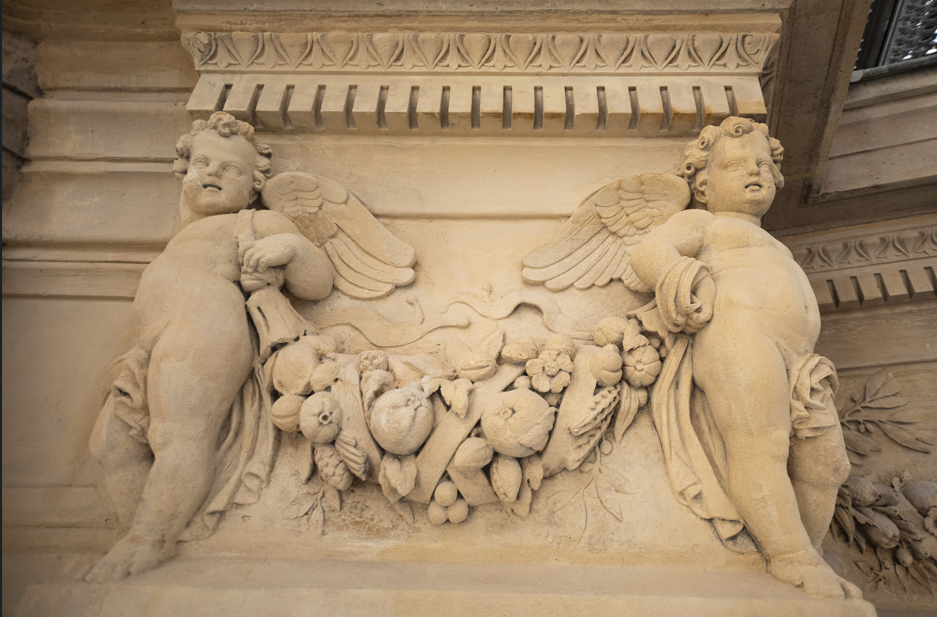
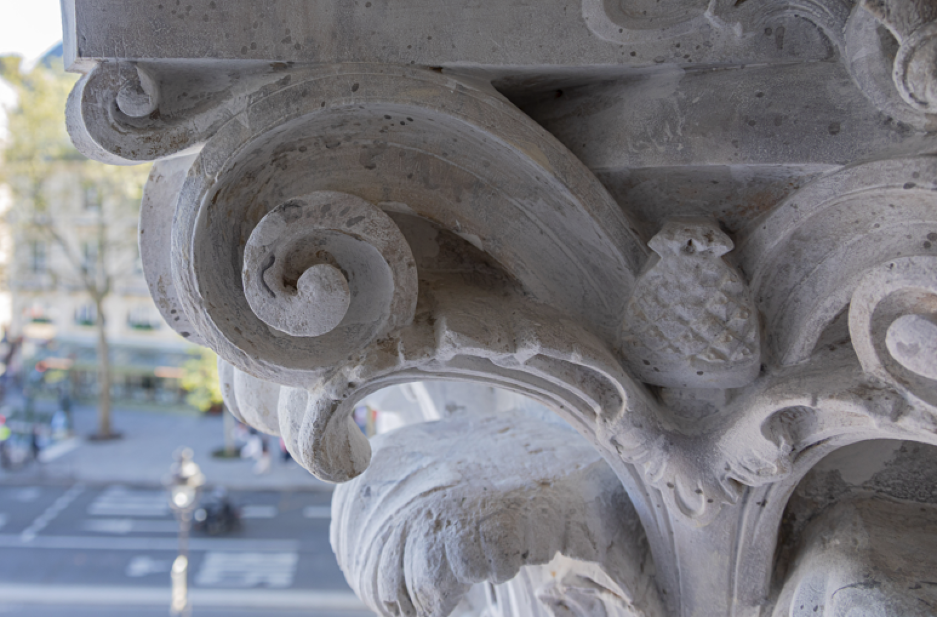
Claude Pagin, a sculptor, has breathed new life into the sculptures. Chisel in hand, he has restored the faces, animals, cherubs, and capitals to their former glory. But there was no room for improvisation: “I worked from all the available archives on the monument compiled by historians and materials research laboratories, ” he explains.
Meticulous work has also made it possible to reconstruct the architectural setting. “The fountain, which has been listed as a historic monument since 1926, was subject to strict scientific and technical oversight by government agencies and the DRAC (Regional Directorate for Cultural Affairs),” notes Pascal Chossegros, an architect who participated in the restoration.
The fountain, facing due north, does not get any direct sunlight. That is why it features such a rich array of colors to bring light to the space. Today, Parisians can see it just as it looked in 1860.
Architect
The restoration goes far beyond mere cosmetic work for this monument with its theatrical effects. Blonde stone, anthracite-gray rock, red marble on the columns… the whole structure plays on contrasts thanks to a varied palette of stones and materials. “The fountain, facing due north, doesn’t get any direct sunlight. That’s why the rich polychromy was used to bring in light. Today, Parisians can see it just as it looked in 1860, ” continues Pascal Chossegros.
A fountain designed to be seen from a distance
Another key figure in the restoration, architect Gabin Deltor emphasizes the complexity of the structure: “This fountain isn’t just a facade—it’s an entire building. This architecture was designed to be viewed from a distance, but it’s not merely a backdrop. It’s a structure that combines very different colors and materials—polished and matte surfaces, bronze, and numerous colored elements—along with all the challenges associated with the aging of materials.”
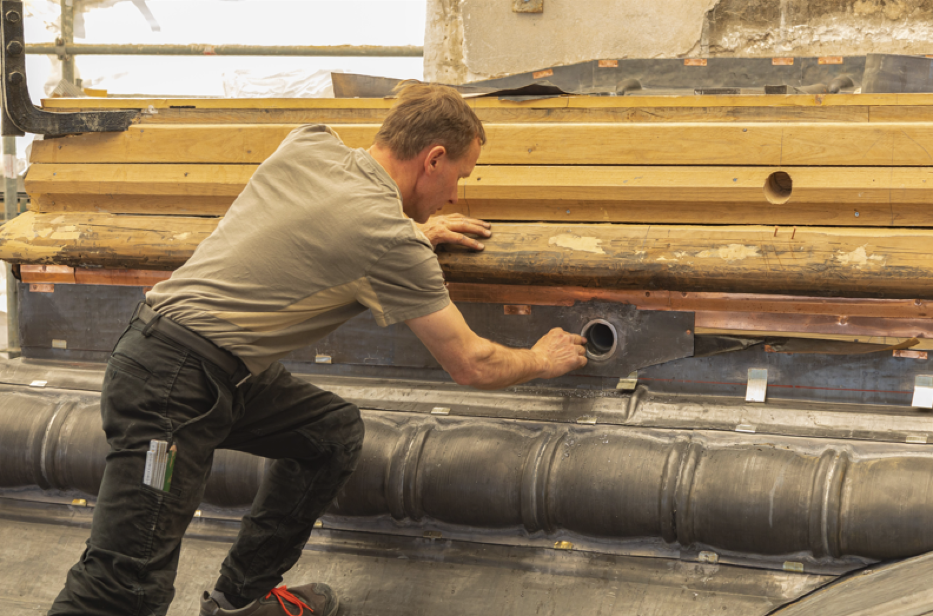
The monument is covered with a wooden frame and a zinc roof, both of which were fully restored for the occasion. The diversity of the structures required restoration methods tailored to each material and the involvement of numerous specialists.
Damaged by water seepage, some stone blocks had to be replaced or recut. A major “de-restoration” effort also made it possible to remove the old protective coatings. “We used only natural, non-aggressive products to preserve the stone, ” says Pascal Chossegros.
Not all of the stones from the basin, which were restored in Burgundy, could be reused. The yellow and red Jura stone, which was originally used but is no longer available, was replaced by a stone with the same characteristics, quarried in Corton (Côte-d’Or), in a quarry that was reopened for the occasion.
A new sparkle, day and night
All the columns and bases have been restored. “There isn’t a single 10-square-centimeter area that hasn’t been cleaned, ” notes Fabrice Bellegueule, a marble craftsman. It took up to a month of work per column, first by machine, then by hand to preserve its curves.
As for the fountain system, the machinery has been completely replaced. “We now have a much more environmentally friendly system. Gone is the chlorine smell of the past, thanks to UV filter treatment, ” explains Gabin Deltor. But there’s also a historical aspect to this. The new installation will recreate the waterfall effect originally envisioned, which had never actually worked due to the lack of a pump powerful enough. However, this will have to wait until the final phase of construction, in the fall, when the stones for the pool will be laid—an essential step before refilling the pool with water.
And to fully appreciate the result, the fountain is also worth visiting in the evening. The lighting design, reimagined by a lighting designer specializing in monuments and museums, will highlight the restored details and contrasts. It’s the perfect way to enjoy the renewed splendor of this Latin Quarter landmark, day or night!
The Return of the Statues: A Video
In late July 2026, the four virtues were returned to their places at the top of the Saint-Michel Fountain, along with the two chimeras. Imagine the challenge: hoisting these bronze giants more than 10 meters high, among the trees… A task requiring the utmost precision for the teams on site! Stoic and majestic, the statues look even more magnificent now that they have been restored in the workshop.
Vidéo Youtube

Settings Text Html